Week Ending 11/4/2022

MARKET RECAP

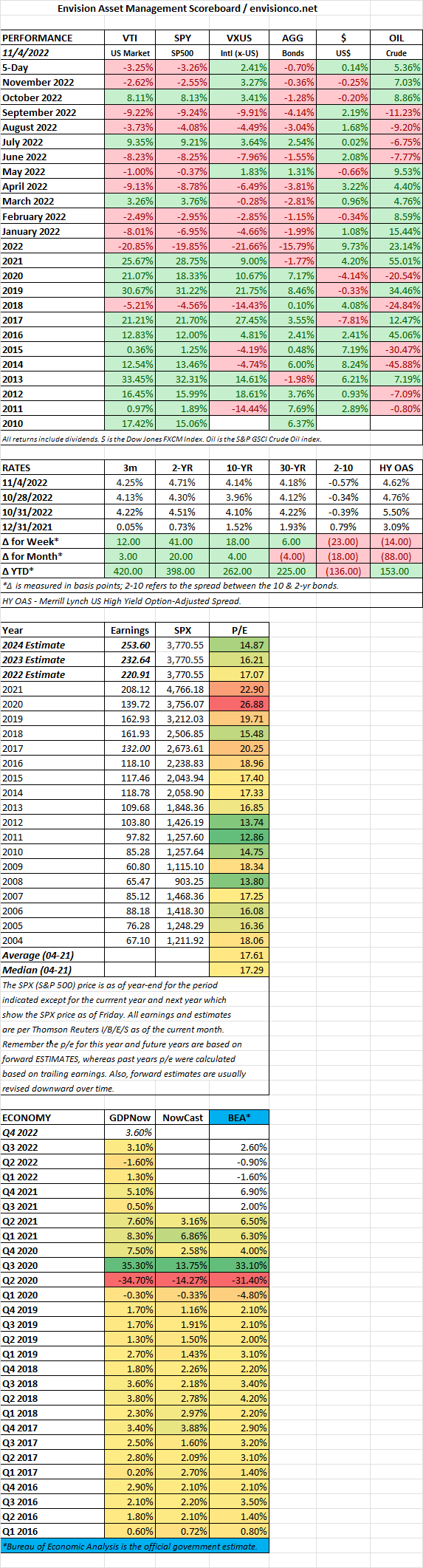
The S&P 500 fell by 3.35% and the Nasdaq was off by 5.65% on fears of more interest rate increases. The Fed doesn’t seem concerned that they might be overdoing it and is intent on increasing rates until inflation breaks, no matter what the damage. Similar to what they did on keeping interest rates at essentially zero for way too long, no matter what the damage.

The market has now retraced about half of the recent market gain.
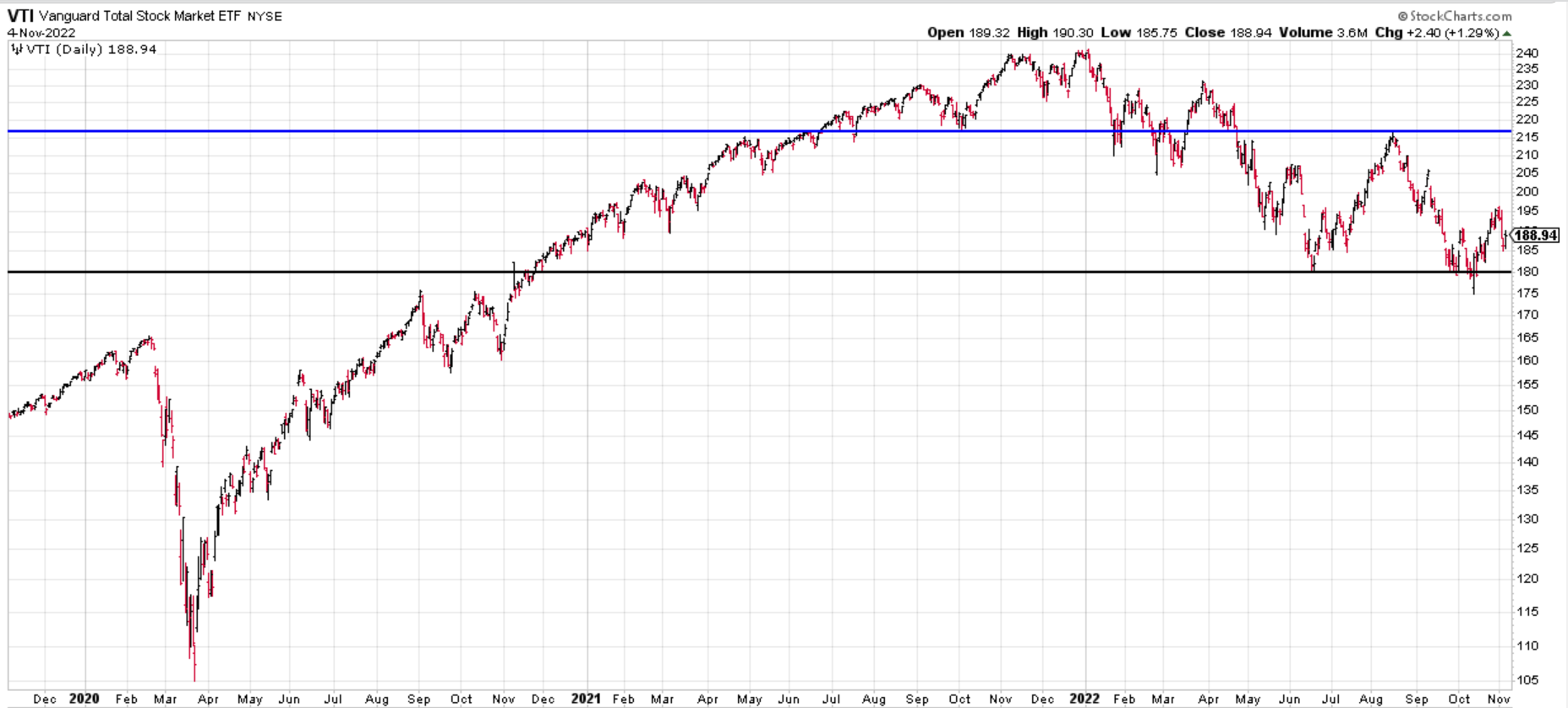
Fed Chair Jerome Powell said, “We still have some ways to go, and incoming data since our last meeting suggest that the ultimate level of interest rates will be higher than previously expected.”

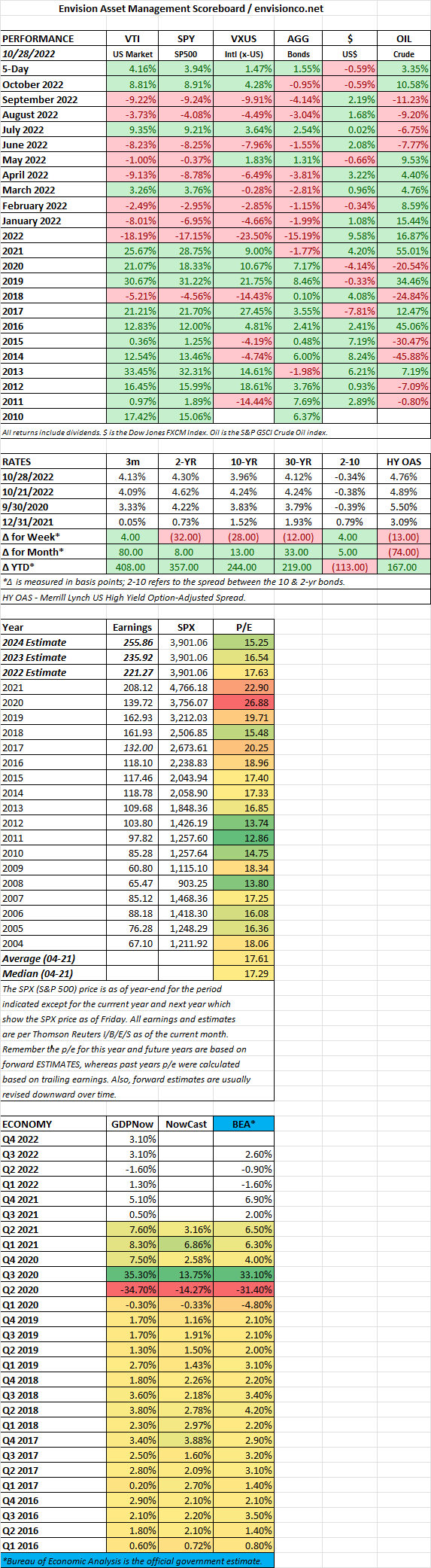
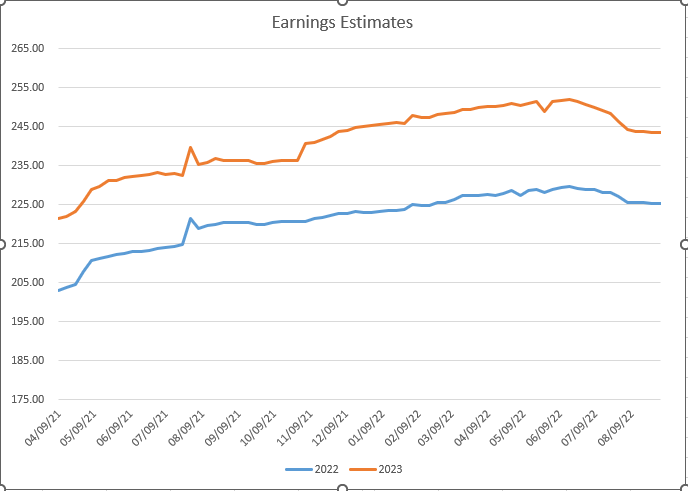
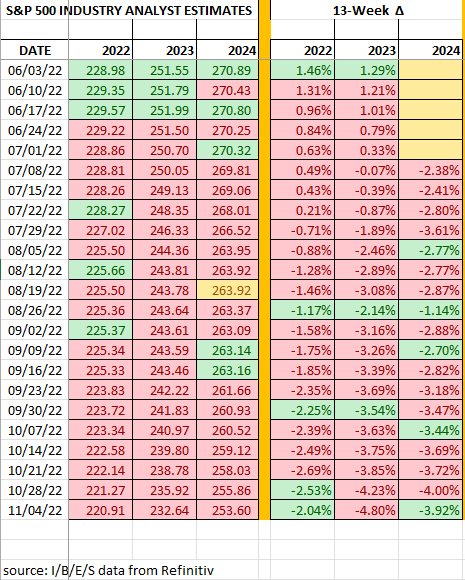
Projected earnings estimates have been dropping at an accelerating rate. The 2023 estimates have fallen by 4.80% over the last 13 weeks. But economic growth for Q4 is looking decent, the Atlanta Fed’s GDP Model has Q4 growth at 3.6%.
Employment increased by 261,000 jobs in October, the lowest amount since December of 2020, but still greater than the pre-pandemic average of 198,000.  The unemployment rate increased to 3.7%. The report shows that the jobs market, while still positive, is beginning to lose momentum. Twitter, Lyft, and Stripe all announced layoffs this week. Average hourly earnings were up by 0.4% in October versus 0.3% in September. But year over year, the increase was 4.7% compared to 5% in October, both off from the 5.6% March high point.

SCOREBOARD
Week Ending 10/29/2022

MARKET RECAP

Another incredible week as US stocks rose by 4.16% and are now up 8.81% for the month; this is in the face of what is almost certainly another 0.75% increase in the fed-funds rate this week. Or maybe the market is looking ahead to what often is a market rally after the midterm elections. According to the Stock Traders Almanac, the Dow has averaged a gain of 46.8% since 1914 from the midterm low to the pre-election year high. But that metric will undoubtedly be tested by a Fed focused on slowing the economy until inflation fades.

The Dow is up 14.4% for the month, and assuming nothing crazy on Halloween, will turn in its best performance since January of 1976.

Except for Apple, big tech missed on earnings. Microsoft scraped by with a small beat, but disappointed investors with its outlook, Alphabet’s revenue fell short in the advertising category, and Meta missed on overall sales.

SCOREBOARD


Week Ending 9/2/2022

MARKET RECAP

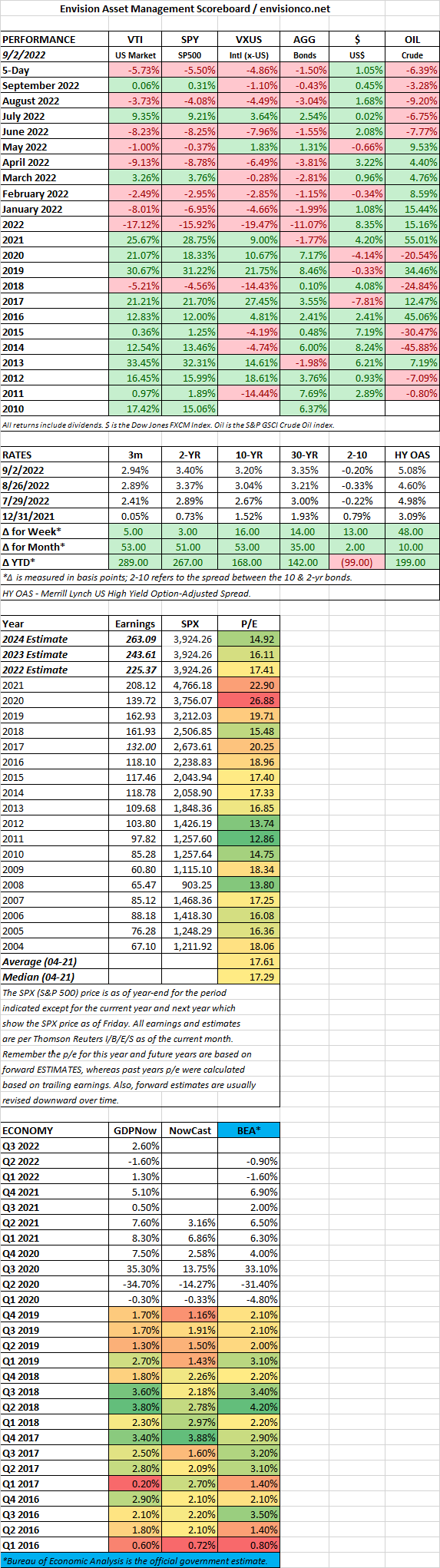
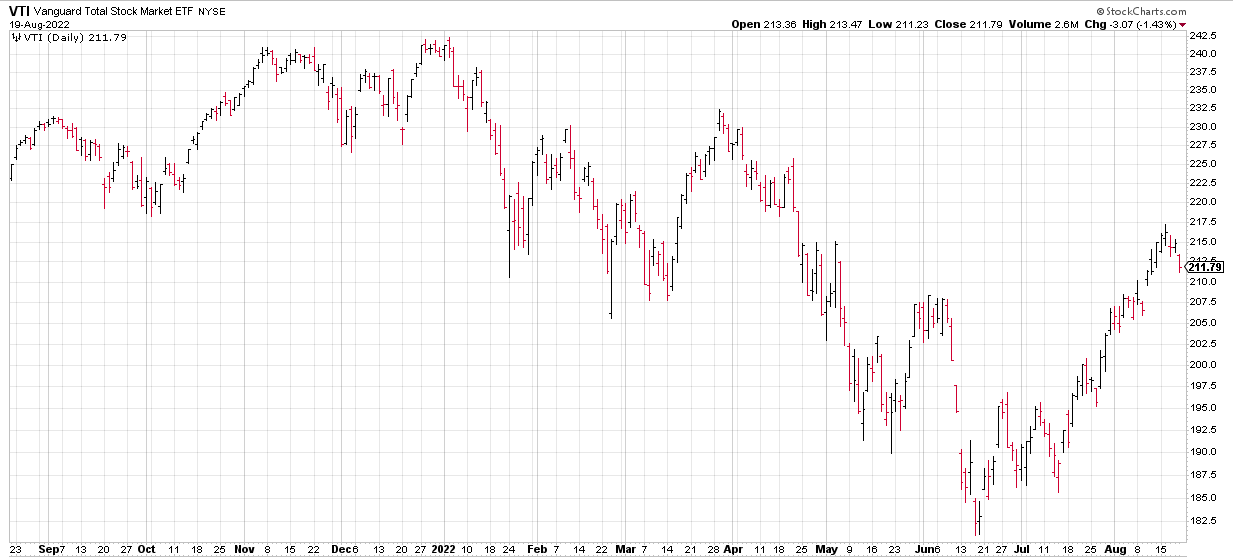
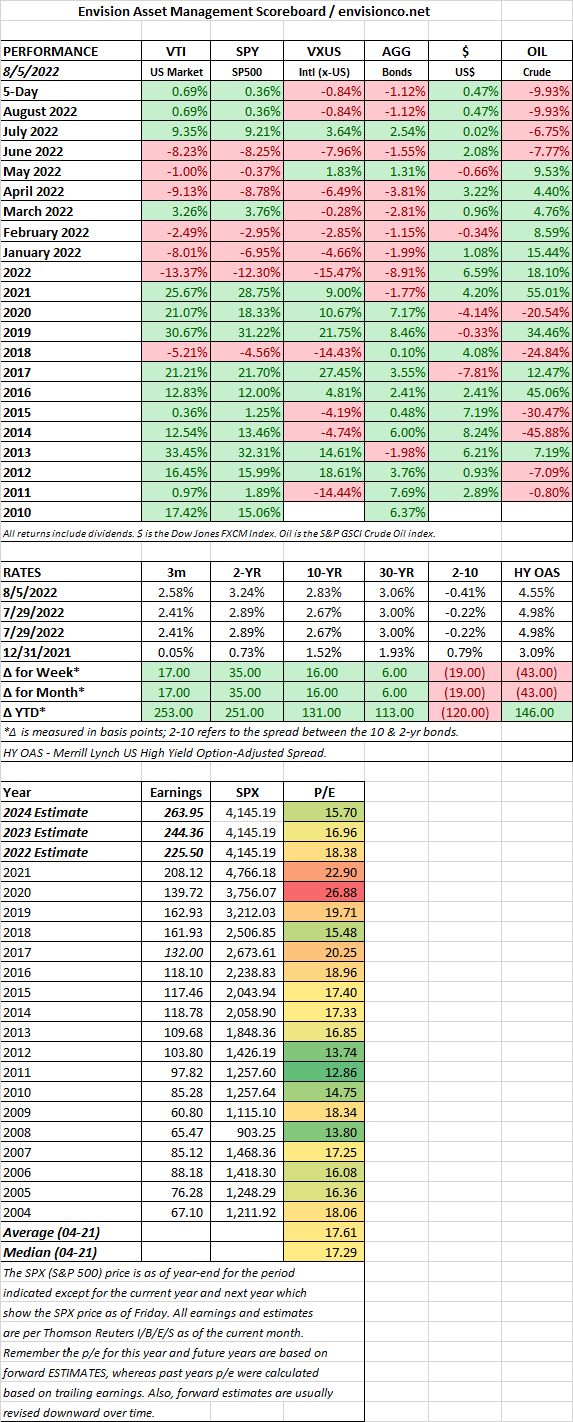
US stocks fell by 3.5% for the week and were down by 3.73% for August. International stocks dropped by 4.49% and bonds took a 3.04% hit. Oil dropped by 9.20% and the dollar increased by 1.68% for the month.

Stocks are currently selling at 17.4x 2022 estimates for the S&P 500 and 16.1x 2023 numbers. The 2023 numbers peaked on about June 17 and have declined by about 3.33% since then. Much less than what was expected, but there is probably more to come.

Employment increased by 315,000 jobs in August, down from 526,000 in July. The increase is still considered a solid absolute number but indicates some cooling in the job market. The unemployment rose to 3.7%, up from 3.5%, as more workers entered the labor force. Those seeking work are now at 62.4% compared to 62.1% in July. Average hourly earnings were 5.2% higher than one year ago, consistent with the prior month. And month over month, the increase was 0.3%.

The Group of Seven agreed to an oil price cap for Russian oil, and in turn, Russia suspended natural-gas flows to Europe, although they blamed the stoppage on repairs. The oil price cap relies effectively relies on insurance to enforce its terms. In order to get insurance, buyers would have to observe the price limit. Almost all insurance for these types of shipments runs through G7 countries.

SCOREBOARD

Week Ending 8/28/2022

MARKET RECAP

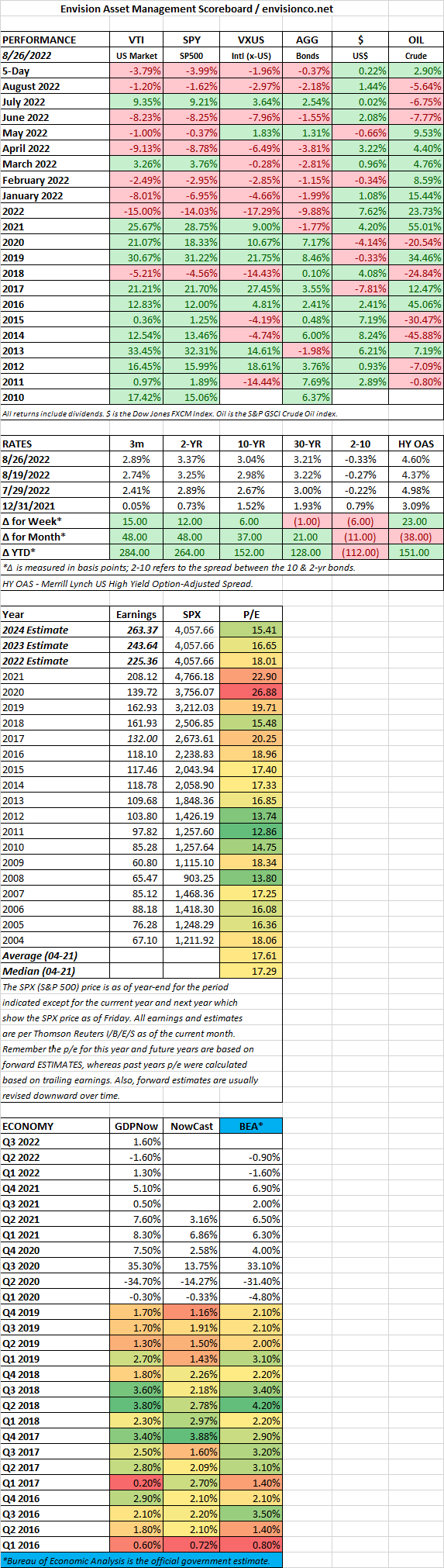
The market’s wishful thinking that the Fed would step off the brakes earlier rather than later officially came to a close on Friday in Jackson Hole when Fed Chair Powell said that “We will keep at it until we are confident the job is done.” Powell made clear that there will be no pivot in strategy anytime soon and that the end goal is to get inflation back to the 2%. Fed officials have made projections that rates would need to get to almost 4% by the end of next year for that to happen. Stock plunged, with the Dow dropping by more than 1,000 points. The S&P 500 dropped by 3.4% and the Nasdaq by 3.9%.

For the week, the overall US market was down by 3.79% and bonds fell by 0.37%. Year-to-date, US stocks are down by 15% and international markets are off by 17.3%, bonds are in the negative by 9.88%.

Powell wants to avoid the mistakes of the 1970s and early 80s when the Fed didn’t follow through on interest rate increases and inflation remained a persistent problem until Paul Volker has to raise rates to very high level to break the cycle.

SCOREBOARD

Week Ending 8/19/2022

MARKET RECAP

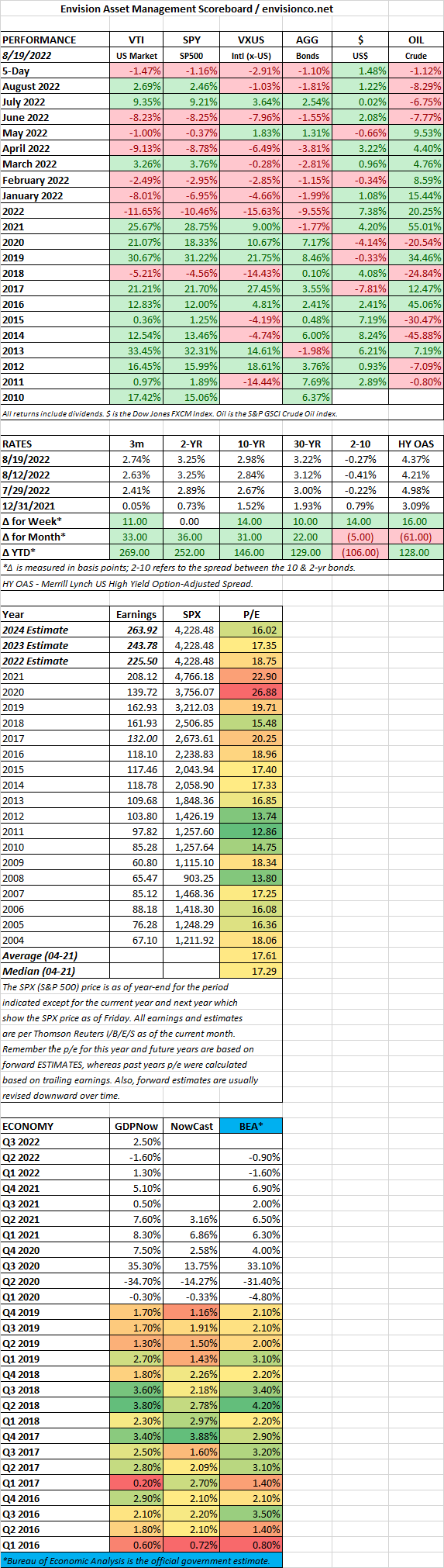
The stock market’s four-week winning streak came to a close as US equities fell by 1.47%. The cheery optimism that the Fed may apply the brakes to aggressive interest rate hikes was notched down a bit based on the release of the minutes from the Fed’s July meeting and comments from central-bank officials.

Bed, Bath & Beyond showed that even after the big sell-off in 2022, speculators were quick to go back to their old ways, as the stock was up by 122% since July 1 (despite any positive news), and then fell by 41% on Friday when it was revealed that billionaire Investor Ryan Cohen sold off his entire investment.

SCOREBOARD


Week Ending 8/12/2022

MARKET RECAP

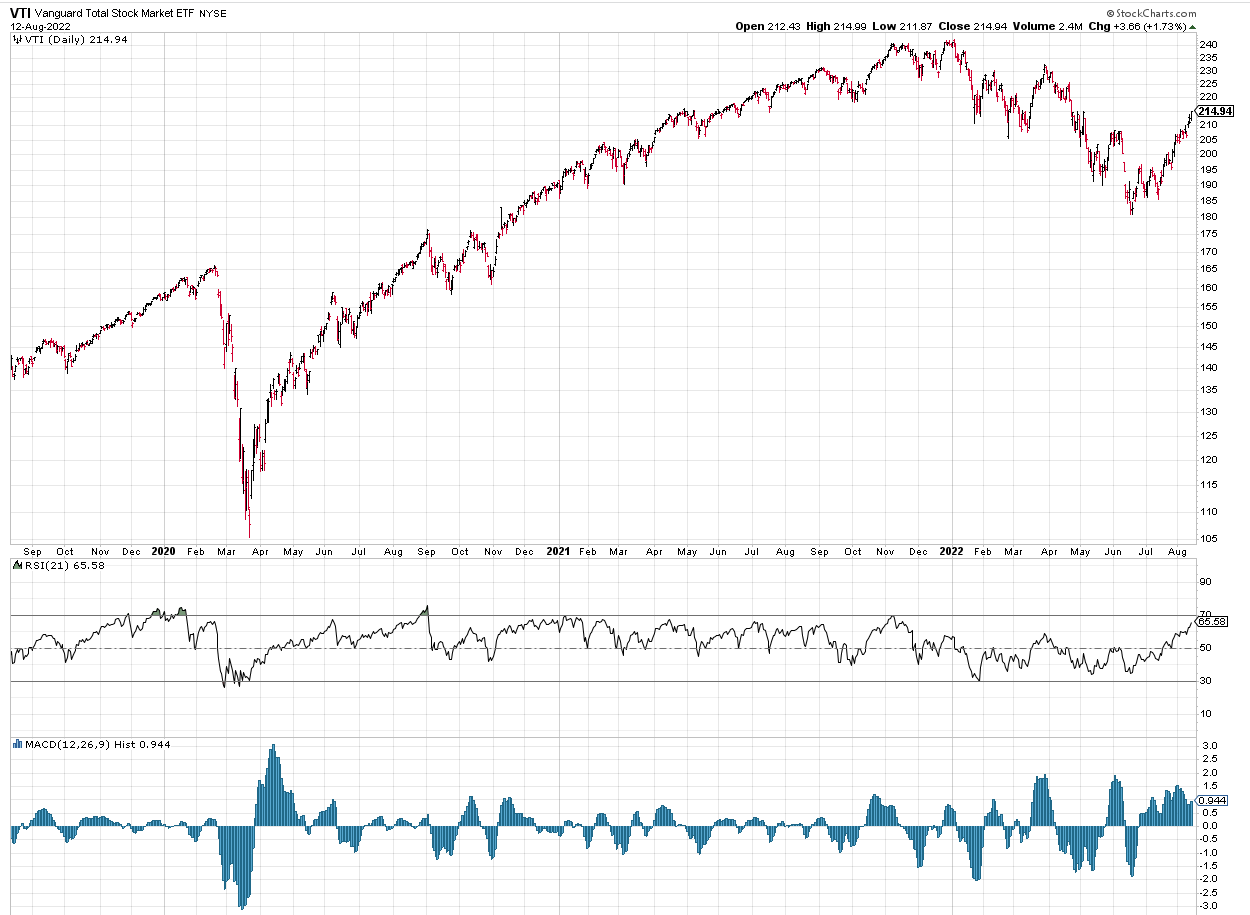
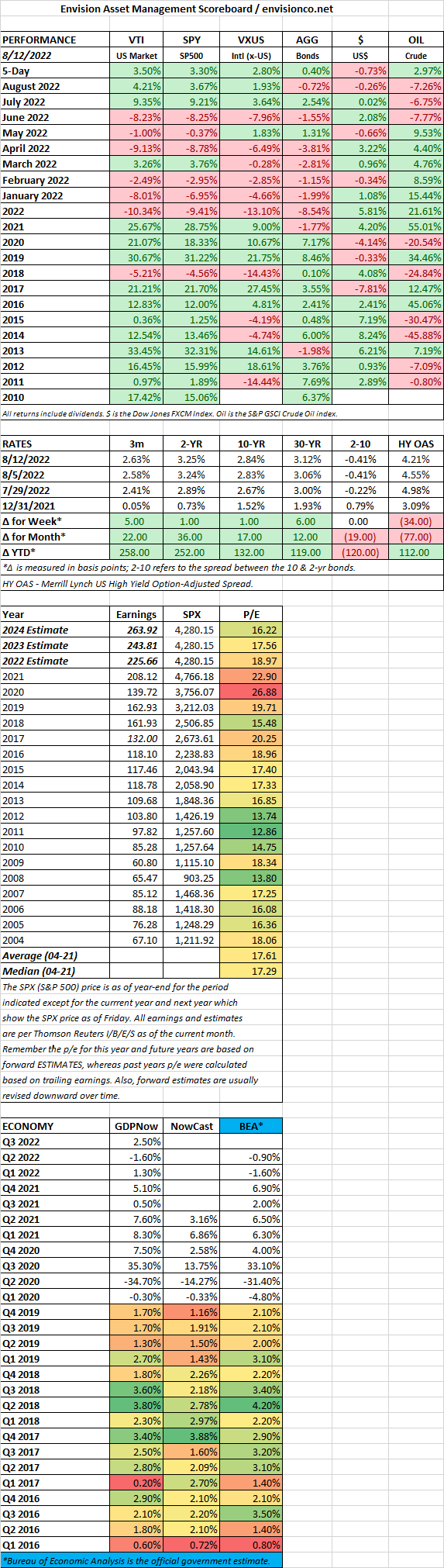
  • US stocks up by 3.5% and international stocks by 2.8%, bonds by 0.40%.
  • CPI was flat for the month, but up by 8.5% for the year.
  • Apple now makes up 7.3% of the S&P 500 with a $2.7 trillion market cap.
  • The market rally over the last four weeks is based on the thesis that inflation has peaked, that means a less aggressive Fed, lower interest rates, higher stock prices.
  • Almost 90% of S&P 500 companies have reported earnings with a 5.2% overall increase.

SCOREBOARD

Week Ending 7/29/2022

MARKET RECAP

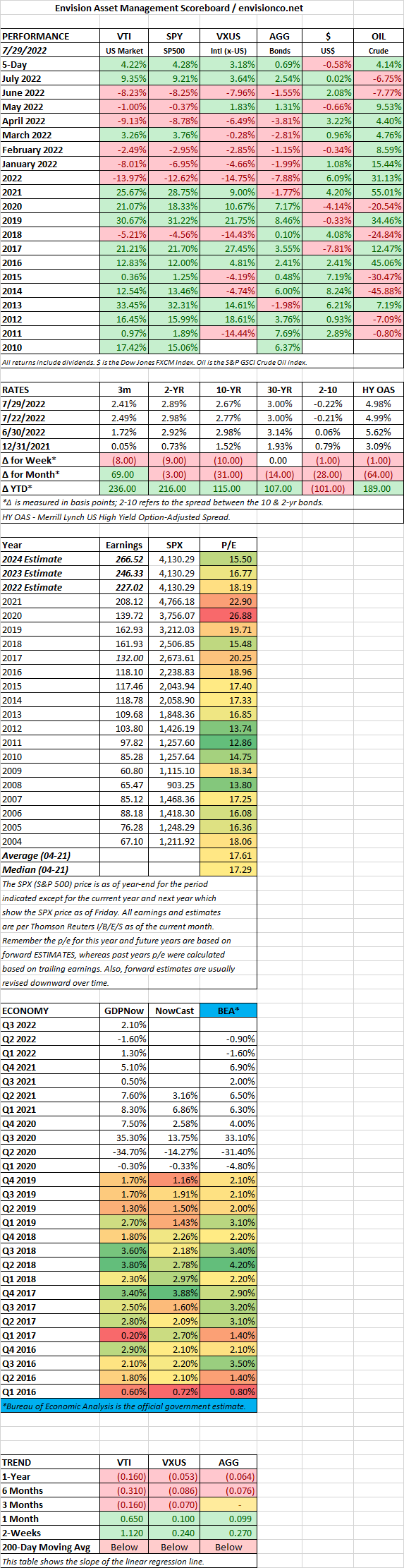
The S&P 500 fell by 20.6% for the first six months of the year. At the time, we wrote, “the market has fallen at least 15% in the first six months of the year in 1932, 1939, 1940, 1962, and 1970, down by an average of 24.7% in those years. But stocks rallied in the back half of those years by an average of +21.2%.” At least so far, true to form, stocks went into rally mode, the S&P 500 gained 9.1% for July, the best performance since November of 2020. The monthly performance was helped by an ultra-strong week, US stocks were up by 4.2% and international stocks by 3.2%. Bonds increased by 0.69% as interest rates continued to fall.

Investors are counting on the old bad news is good news mindset. A slowing, or declining economy, means interest rates don’t need to rise as much, and interest rates cuts would happen sooner than expected. Also earnings have not been as bad as feared.

But it is still too early to call the all clear. There have been plenty of times when markets have gone back to test the lows, or even break them. Inflation is not done yet, the economy just banked two successive quarters of declining growth, with no clear signs of an economic pickup. Cutting interest rates too soon would be out of the 1970s playbook, a strategy that didn’t work so well in fighting inflation.

GDP declined by 0.9% in the second quarter. That marks the second straight quarter of declining GDP, the unofficial sign of a recession. Wages and benefits increased by 5.1% in the second quarter, compared to a year earlier, but that was short of the 9.1% increase in consumer prices. The wage and benefit increase was the most ever, since they started keeping records in 2001.

SCOREBOARD

Week Ending 7/22/2022

MARKET RECAP

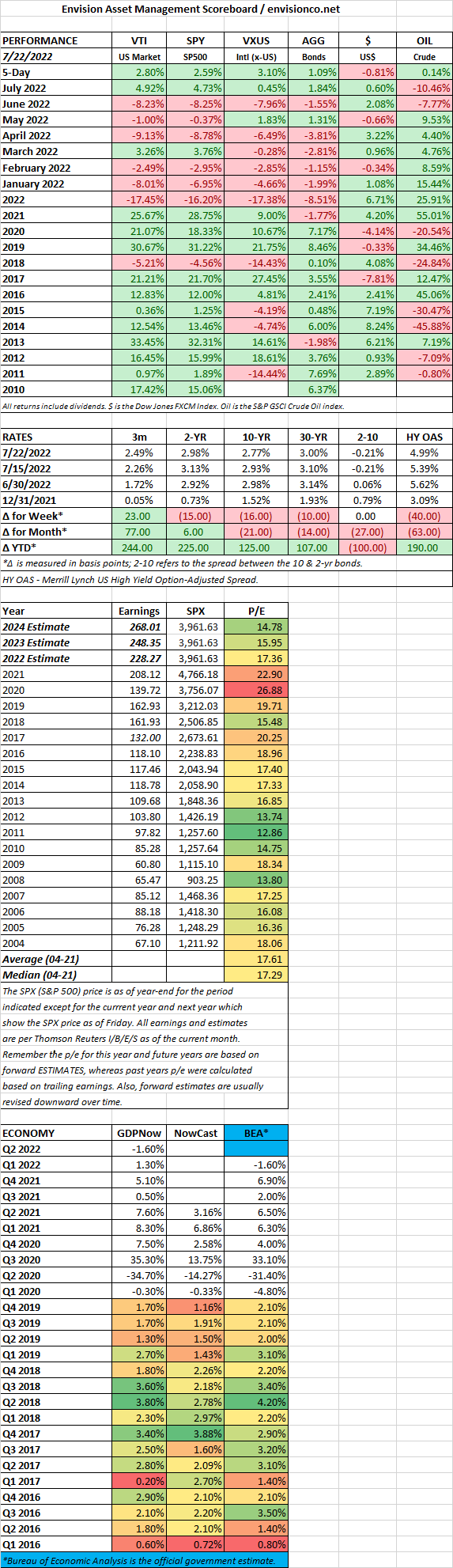
US stocks increased by 2.8% for the week, putting in its best performance in a month.  The international markets were up by 3.1%, and bonds jumped by 1.09% as interest rates fell sharply. But stocks did not close the week well, on Friday, the S&P 500 fell by 0.9% on disappointing earnings by Snap, which dropped by 39%. Meta and Alphabet fell in sympathy, registering drops of 7.6% and 5.6%.

S&P 500 companies have beaten estimates by 3.6% according to FactSet, lower than the five-year average of 8.8%. About 20% of companies have reported. But there is a chance that earnings growth will actually be lower when all is said and done, after backing out energy profits.

The Markit Composite Purchasing Managers Index fell into contractionary mode, registering a 47.5 score. Also, the Conference Board’s leading indicators turned negative. The composite PMI for Europe fell to 49.4 from 52.

Jobless claims continued their slow, but steady rise, with a 7,000 increase from last week to 251,000. The four-week average was up by 4,500 to 240,500. Continuing claims totaled 1.4 million and was up from 1.3 million the week prior. Guy Berger, the principal economist at LinkedIn said “It doesn’t look recessionary…but it’s definitely less good than it was before.”

The ECB raised rates by 50 basis points, bringing their key interest rate out of negative territory to zero. They also unveiled a plan to buy debt from the weaker countries.

SCOREBOARD


Week Ending 7/15/2022

MARKET RECAP

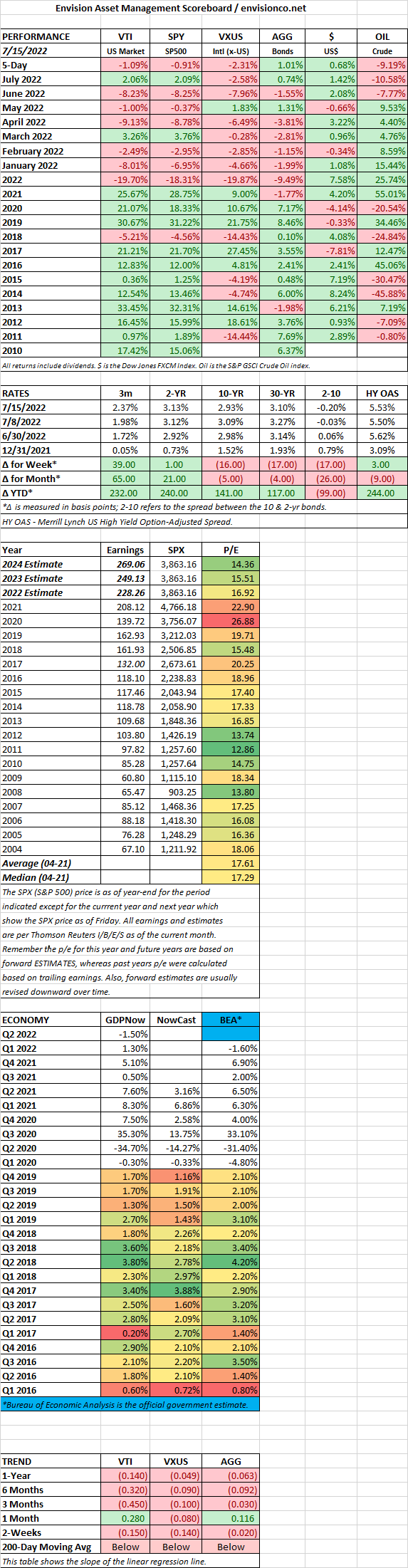
  • US stocks were off by 0.91% while international equities fell by 2.31%. Bonds increased by 1.01%. The yield on the 10-year dropped by 16 basis points but the 3-month yield increased by a whopping 30 basis points. The 2-year treasury bond (3.13%) is inverted when compared to the 10-year (2.93%), a possible recession indicator.
  • Earnings season started this week and companies representing 6% of the S&P 500 market cap reported, excluding financials, earnings beat estimates by 3.3%. Financials did not fare as well, JP Morgan and Wells Fargo missed estimates. JPM froze its buyback program and increased its capital cushion for potential future credit losses. WFC and Citibank did the same, setting aside hundreds of millions for possible future credit losses. Citibank Chief Executive Jane Fraser said, “While sentiment has shifted, little of the data I see tells me the U.S. is on the cusp of a recession…so while a recession could indeed take place over the next two years in the U.S., it’s highly unlikely to be as sharp a downturn as others in recent memory.”
  • Inflation clocked in at 9.1%, the highest number in the last 40 years, and worse than expected. Grocery prices were 12.2% higher. Inflation is a backward looking indicator, but it was hard to find anything good in the report. The only good news, not reflected in this report, is that commodity prices have been falling hard in the last few weeks. Gas is now $4.577 per gallon compared to a June 14th peak of $5.016, according to the AAA.
  • Retail sales were up by 1% in June, but that trailed the 1.3% increase in consumer prices. The sales numbers showed that for the most part, consumers are hanging in there with higher prices.
  • The Fed said that manufacturing output fell for the second straight month in June. Home construction is slowing. And the University of Michigan index of consumer sentiment was close to the lowest level on record.
  • Initial jobless claims were 244,000, up from 235,000. The number is still low historically has been been very slowly trending higher.

SCOREBOARD