MARKET RECAP
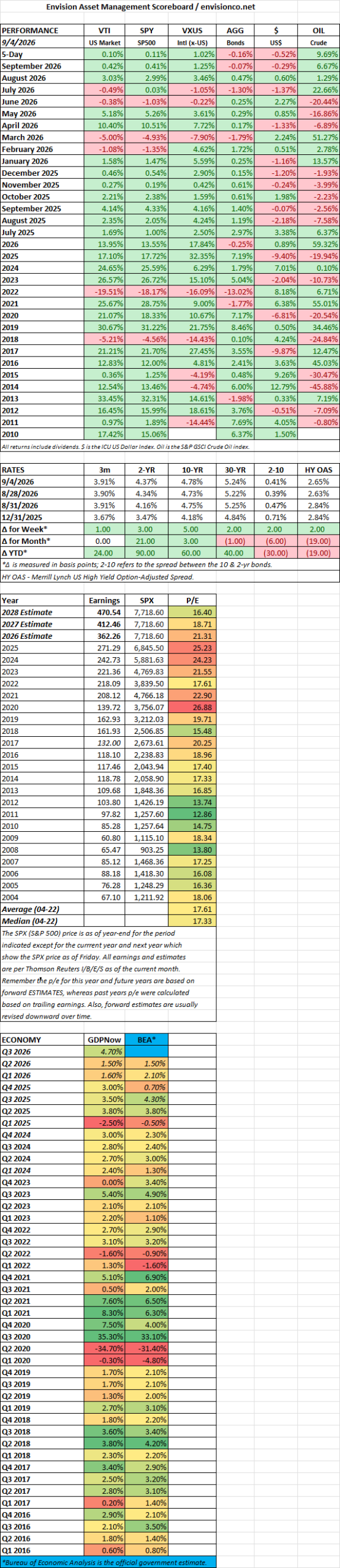
U.S. stocks finished mixed for the week ended September 4 after a late pullback on stronger-than-expected jobs data. The S&P 500 rose 0.1% from the prior Friday’s close of 7,711.76 to 7,718.60. The Dow Jones Industrial Average slipped 0.3%, falling from 53,559.99 to 53,414.25. The Nasdaq Composite gained 0.4%, climbing from 26,402.42 to 26,506.99. International stocks, as measured by VXUS, outperformed with a 1.0% weekly advance from $87.52 to $88.41.
The August employment report, released Friday, showed nonfarm payrolls rose by 162,000—well above forecasts—while the unemployment rate held at 4.1%. Labor-force participation increased 0.2 percentage point to 61.6%, and prior months were revised higher by a combined 55,000 jobs. Gains were concentrated in food services and local government education. Initial jobless claims for the week ended August 29 ticked up 2,000 to 206,000, remaining historically low.
The stronger labor data lifted the 10-year Treasury yield from 4.73% the previous Friday to 4.78%, as markets priced a greater chance of a September Fed rate hike.
Bitcoin rose roughly 3% on the week and traded near $80,000, while gold eased about 0.6% to around $4,430 an ounce.
Geopolitical tension remained a market driver: renewed U.S.-Iran exchanges around the Strait of Hormuz pushed oil higher and sent U.S. gasoline prices to a record Labor Day level. A stopgap funding bill was signed to keep the government operating through mid-December, and attention also turned toward the approaching midterm elections.
Overall, equities held near recent highs despite Friday’s decline, but firmer jobs numbers, higher yields, and elevated energy prices left investors focused on inflation data and the Fed’s next move.
SCOREBOARD